Posts

Creating a Word Collector Bulletin Board With Fadeless Paper
Image
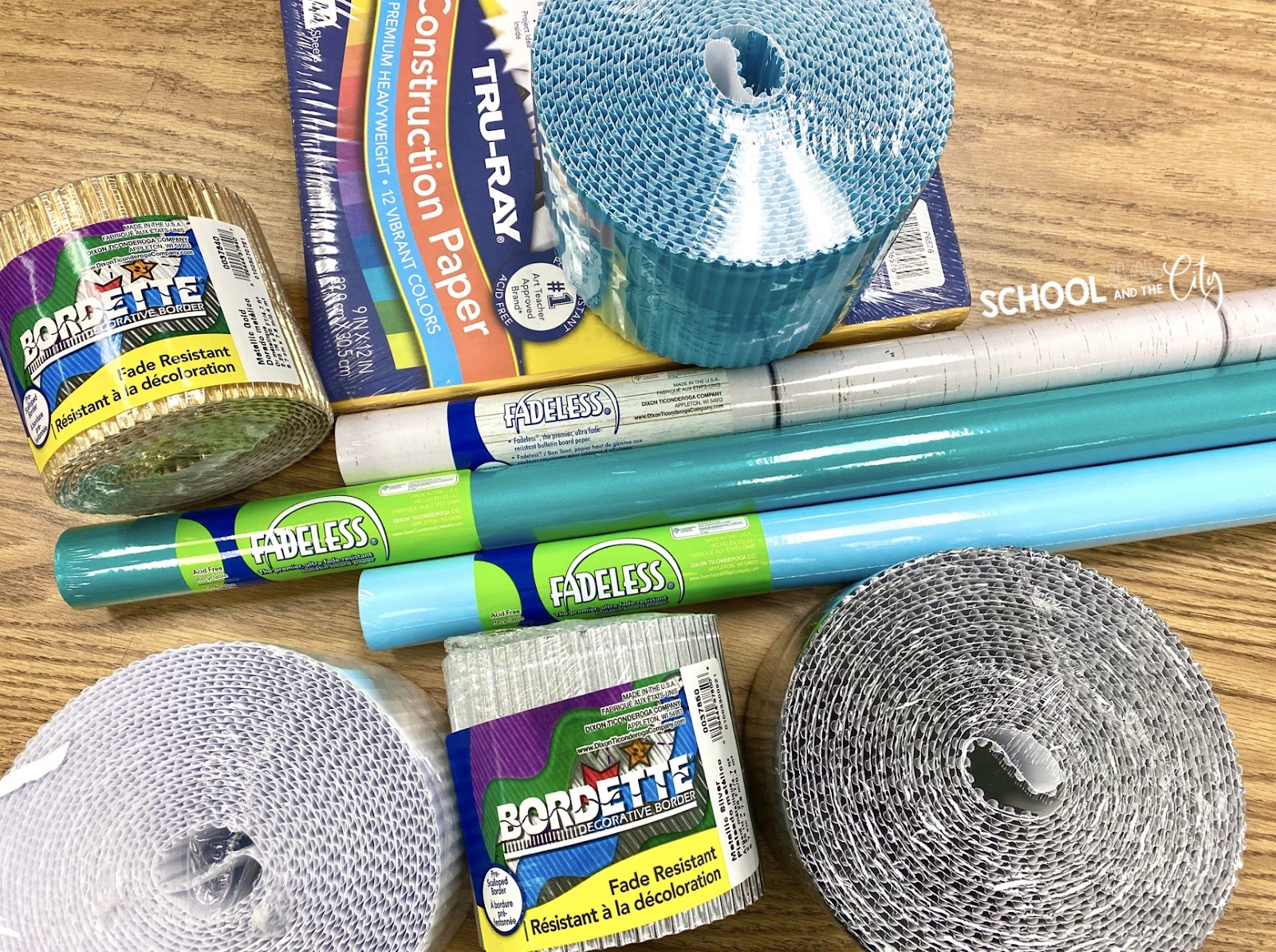
As an instructional coach, I try to find fun but simple ways to add a little more literacy to students’ lives. I’ve created a few literacy-related bulletin boards in common spaces around the school. This new board is one of my favorites… Let me tell you all about it!  I had an idea for a new board concept, but like any good idea, I needed a strong foundation.  I learned the hard way last year that regular butcher paper just doesn’t cut it when it comes to bulletin boards in busy hallways. These bulletin boards are exposed to direct sunlight and hundreds of hands every single day. By the end of the year, they were barely hanging on.  This time around, I knew better. What could I use instead to create a beautiful bulletin board that would look just as beautiful by the time May rolls around? Enter: Fadeless Paper !  Fadeless paper is high-quality, fade-resistant paper. It won’t fade after a month or so of sunlight exposure like typical butcher p...

Favorite Phonics Supplies from Amazon

Image
This year, I'm working as a reading coach and interventionist. I love teaching phonics all day long and getting to work with different grade levels. Throughout the years, I've developed favorite phonics supplies, of course. I've also changed my practice a lot due to recent professional learning. If I had to pick my top must-have supplies for teaching phonics, these would be them. You can find all of these on Amazon for easy shopping! Sound Boxes and Chips Chips, or some sort of manipulative, are a must for orthographic mapping. I've used cubes, mini erasers, game pieces... Bingo chips are my favorite because of their size and how easily they slide. I make my own sound boxes, but I love this set that I found on Amazon. It's affordable and serves as a great scaffold for your young students. Letters, Letters, Letters! This seems obvious, but yes, you need a LOT of letters to give students the opportunity to have hands-on experiences man...

Animal Research Projects

Image
Animal research projects are the way to go when it comes to teaching informational writing. Kids LOVE animals and have so much fun learning and writing about them. But teaching writing is hard. I feel ya. My team felt is was especially hard to teach informational writing including the need for conducting research. That's A LOT for a 3rd grader, y'all! After some trial and error, I've developed templates to use with my students to walk them through the informational writing process. Research We start with a recording sheet to help students track and organize information as they research. I model this for students first. I show them how to read an article and record the information in appropropriate sections. I like to use bullet points because it helps eliminate students copying sentences word for word. This takes a lot of modeling and a lot of practice! It definitely takes a few days, at least, for students to successfully complete thei...

5 Parent Communication Tips

Image
This topic is making me sweat just thinking about it: Parent communication! * shiver * I'm entering my 9th year of teaching, but communicating with parents still gives me anxiety. I've dealt with some amazing parents along with the worst of the worst. Here are 5 things to keep in mind when communicating with your students' guardians. Make Positive Contact This is my favorite (and possibly the most effective) of all the parent communication tips. Make a point to communicate with individual parents as soon as the school year starts. Find an easy way to start building relationships with parents, which will set you up for success in the future should you have to have tough conversations. (And you will!) I personally use these notepads , which make it super easy and quick for me to compliment a student. There are lots of free printable options on TPT, too. One of my principals made it a requirement for all teachers to make positive contac...

How I Manage Lesson Planning & Pacing

Image
Topic of the week: Advice for lesson planning and pacing . I'm going to be completely honest - I don't think I knew what a pacing guide was my first year teaching. I definitely did not make my own or even use district guides effectively until at least year 4 or 5. I just followed what my coworkers were doing (and they knew what they were doing, thank goodness!) But, the more you know… Resources probably already exist. Last week we covered content knowledge, and I encouraged you to at least locate your state's standards. In many cases, your state - or your district - might have a pacing guide that you are expected to follow. A pacing guide is essentially your roadmap for the year. It tells you what to teach and when to teach it. That way your year is paced appropriately without rushing or running out of time. Before you spend your precious time planning out your year, check your state, district, and school websites and talk with your grade leve...

Classroom Organization: Let's get organized!

Image
Classroom organization can be overwhelming. I get it. A new school year is coming - Let's do our best to organize that classroom for efficiency. Organization is a tough topic because it's different for everyone. What works for me might not work for you, and that's totally okay. You'll have to experiment in order to create systems that work for you. Here's what works for me: Use all the bins! I'm a big fan of plastic drawers ! The drawers pictured above are used for storing my copies (and other materials) for the week. I put copies and such for next week in the bottom drawer as I work on plans throughout the week. I also use plastic drawers to store small group materials, papers that need to be graded or sorted, etc. They are cheap and effective! I like using 12 x 12 scrapbooking bins to store my units: books, games, task cards, posters, etc. These are the Iris brand. I got mine on sale at Michael's for $2.50 each, an...

Mastering Your Content Knowledge

Image
Whether you are a brand new teacher or a veteran teacher moving to a new grade level or subject area, this post is to encourage you to grow your content knowledge now. This may seem like a no-brainer to you, but it certainly wasn't for me. When I was hired for my first year of teaching, I was hired to teach 2nd grade. Before being hired, I had spent less than 2 weeks in a 2nd grade classroom. In the middle of the year. In a different state. I began my first year of teaching having noooo idea what I would be teaching my students. I cringe just thinking back on this. I'm not suggesting you spend your summer studying or doing any heavy lifting when it comes to content knowledge. But if you know what grade level or subject area you will be teaching, spend just a little bit of time getting familiar with your content. Find state resources to learn your content. Google your state standards. Read them. See if your state - or even your district - has...